

Food safety records for retail and supermarkets
A deli slicer, a hot chicken cabinet, a salad bar and trays of cut fruit. Which category a counter is in depends on what it makes, and one new product can change it.
30 day free trial.
Introductory offer: Essential at A$185 a month for your first three months.
- Available on theApp Store
- Available on Google Play
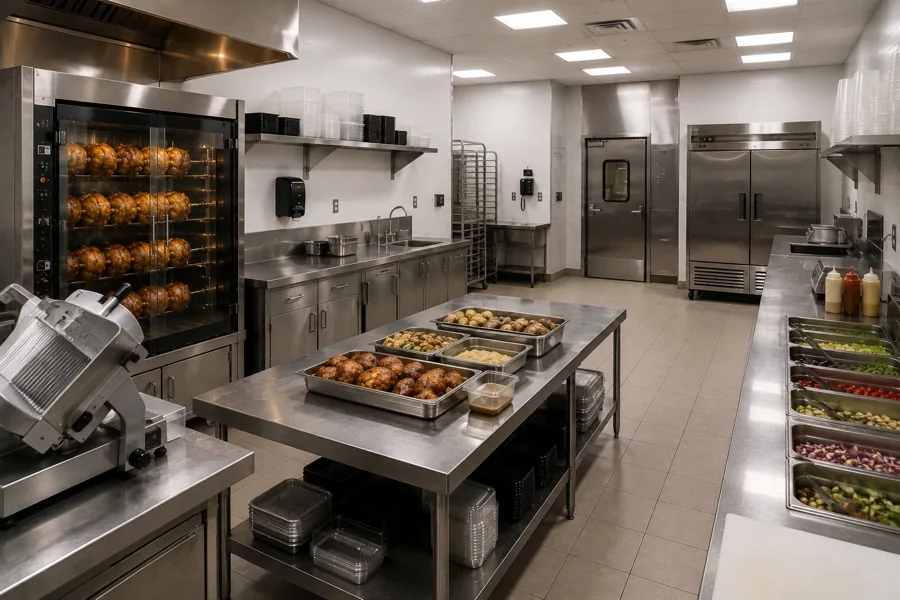
What your counter makes decides its category
- Slices, weighs or repacks ready to eat food it boughtUsually category two. No record keeping tool.
- Reheats or hot holds food it did not makeUsually category two. No record keeping tool.
- Makes sandwiches or salads, or roasts chickens in storeUsually category one. Records, or show control another way.
- Does bothClassed by its highest risk activity, usually category one.
Your local government confirms the category. When a counter starts making something new, its checks can go on a list that day, and the AI Compliance Assistant can explain what the change brings with it.
One list for each counter
A venue opens with three standard lists. A store with several counters can add a list for each, set for only the people who work there, so the deli team sees the slicer and the deli cabinets and nothing from the hot food counter.
Deli
- Deli cabinet temperatures
- Slicer sanitised, with the chemical and contact time
- Use by dates on sliced meats
Set for: deli staff
Hot food
- Hot cabinet read against 60°C or above
- Chickens on the cooking log
- Time each tray went into the cabinet
Set for: hot food staff
Salad bar
- Cold display at 5°C or below
- Serving utensils changed
- Sneeze guard cleaned
Set for: salad bar staff
A check can ask for a photograph, so the cleaned slicer is shown on the record as well as ticked.
A day in your store
- 01
The hot chicken cabinet
The cabinet is a hot holding unit in the equipment register, read against 60°C or above, and chickens cooked in store go on the cooking log first.The cabinet is a hot holding unit in the equipment register, read against 60°C or above, and chickens cooked in store go on the cooking log first.
Recorded in Temperature checks from the equipment register
- 02
Deli cabinets through the day
Sliced meats and salads on display are kept at 5°C or below, and each cabinet is read against its range. A check with a time box can record when each tray went on display instead.Sliced meats and salads on display are kept at 5°C or below, and each cabinet is read against its range. A check with a time box can record when each tray went on display instead.
Recorded in Today's Tasks and checklists
- 03
Use by dates on the shelf
Products on the expiry list come up in Today's Tasks a set number of days before the date on the packet, and the next earliest date takes over once they are cleared.Products on the expiry list come up in Today's Tasks a set number of days before the date on the packet, and the next earliest date takes over once they are cleared.
Recorded in Expiry dates
- 04
A recall notice from a supplier
Affected stock comes off sale, and an incident record keeps what happened.Affected stock comes off sale and is held separate until it goes back or is destroyed. An incident record keeps what happened and how it was closed.
Recorded in Incident reporting
- 05
Cleaning the slicer
The sanitising method record shows how the slicer and boards were sanitised: the chemical and contact time, or the water temperature if heat was used.The sanitising method record shows how the slicer and boards were sanitised: the chemical and contact time, or the water temperature if heat was used.
Recorded in Today's Tasks and checklists
- 06
A new product on the counter
When a counter starts making something new, its checks are added to a list that day. It is also a good moment to ask your local government whether your category has changed.When a counter starts making something new, its checks are added to a list that day. It is also a good moment to ask your local government whether your category has changed.
Recorded in Today's Tasks and checklists
A starter checklist set
For a retailer we would keep the standard lists, add the slicer to the sanitising record, and cut cooking and cooling back if nothing is made in store.
Start free trialOpening fridge, cool room and display cabinet temperatures
Opening freezer check, food hard frozen
Receiving deliveries log
Cold display temperatures
Hot holding temperatures
Cooking and pathogen reduction log, if you cook in store
Sanitising method record, including the slicer
Daily cleaning and sanitising sign off
Closing fridge and freezer temperatures
Stock rotation and use by audit, with food for disposal kept separate
Pest check
Weekly deep clean
Probe thermometer calibration
Registration details current
Food Safety Supervisor and training register
Chemical safety check
Every new venue opens with the same standard daily, weekly and monthly lists. This is how we suggest shaping them, and every check and every list can be changed or deleted.
What applies to you
A counter is usually category two or category one by what it makes, as the table above sets out. Your local government confirms which.
- Food safety supervisorApplies
- Needed in both categories: appointed before food is handled and reasonably available while it is, with a certificate issued within the last five years.
- Food handler trainingApplies
- Needed in both categories. Deli and counter staff need a course, or skills and knowledge that match the work, before they first carry out a prescribed activity. No certificate is required.
- Records, or another way to show controlCategory one only
- A category two counter does not need the record keeping tool. A category one counter keeps records of what it does, or shows an authorised officer another way.
- A written food safety program
- A supermarket or deli in WA needs no written food safety program and no third party audit.
- Also worth knowing
Recalled stock is food for disposal. Clause 11 of Standard 3.2.2 asks that it be kept separate and identified until it is destroyed, returned, reprocessed or shown to be safe.
For food sold unpackaged, allergen information is displayed or given when asked, in the Code's Column 4 names. The bold type and summary statement rules apply to packaged labels, not to an answer across the counter.
This is general information about the law, not advice about your business. Confirm your category and what applies to you with your local government.
Guardian for retail and supermarkets
For a retailer, the officer's review can take in whether the records match the category the store is in, particularly after a new product starts being made on site, and how stock held for disposal was dealt with.
On the Guardian plan a Hospitality Compliance Support Officer (HCSO) reviews your records online, wherever you are, and on site in Western Australia where visits are available. The officer is not an authorised officer: they cannot certify your venue or speak for your local government.
Related kinds of venue
Asked about retail and supermarkets
Does a category two counter need records?
Not under Standard 3.2.2A. A category two business needs a food safety supervisor and trained food handlers, but not the record keeping tool. Records can still help you show what you did.
Do we need a food recall system?
The recall system in clause 12 of Standard 3.2.2 is for businesses that supply food wholesale, manufacture it or import it. A store that does none of those still keeps recalled stock separate as food for disposal under clause 11. If your business also manufactures or supplies wholesale, ask your local government how clause 12 applies.
Which allergen names do we use at the counter?
The names in Column 4 of Schedule 9 of the Code: gluten for barley, oats and rye, soy for soybean, milk rather than dairy, and each tree nut by name. Coconut and chestnut are not declarable in Australia.
Can one reading cover a whole display cabinet?
Yes. One record may cover several foods, so a single cabinet reading covers everything in it, as long as the record gives the date and what it relates to.